

Pareto
What counts...
1/19/20261 min read

Good decisions rarely feel “perfect.” They feel clear—and they have a plan in case you're wrong.
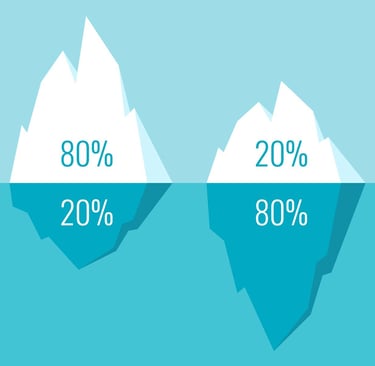
My CEO rule: Speed over perfection. Not out of impatience, but because standing still is often more expensive than a clean test. The Pareto principle helps me with this: 80% of results come from 20% of the effort. This means I don't need to know all the variables. I need to identify the right 20% — and then act quickly.
To ensure that speed doesn't turn into actionism, I use this framework:
1) Is this a “two-way door” or “one-way door” decision? Two-way door (reversible): decide quickly, test, readjust. One-Way Door (difficult to reverse): more time, more perspectives, more cross-checking.
2) What is the smallest step that will bring real insight? Don't “roll out big,” but pilot: 1 team / 1 process / 1 week — as small as possible, as meaningful as necessary. Translated with DeepL.com (free version)
3) Which key figure shows me whether it is working within a defined period of time? A decision without a measuring point is just an opinion. I define in advance:
→ How do I recognize success?
→ How do I recognize early on that it is not working?
→ What is the consequence then: Stop / Adjust / Scale?
4) Who will have to implement it later? I consciously bring in the perspective of the people who have to implement it. This saves weeks of friction and “silent resistance.” Perfection is often just an elegant form of procrastination. Speed without a system is chaos. I try to strike a balance between the two: fast, but not blind.
Question for you: Do you tend to make decisions quickly to test them out, or do you first secure them and then act—and why?
We help you achieve your goals
Address:
Legal notice
doringer@protonmail.com
Zurich - Switzerland
© 2025. All rights reserved.
data Protection